
Smart Sensors for Sport and Health: Research by the Chair of Experimental Training Science in the H2TRAIN Project
News des Departments |

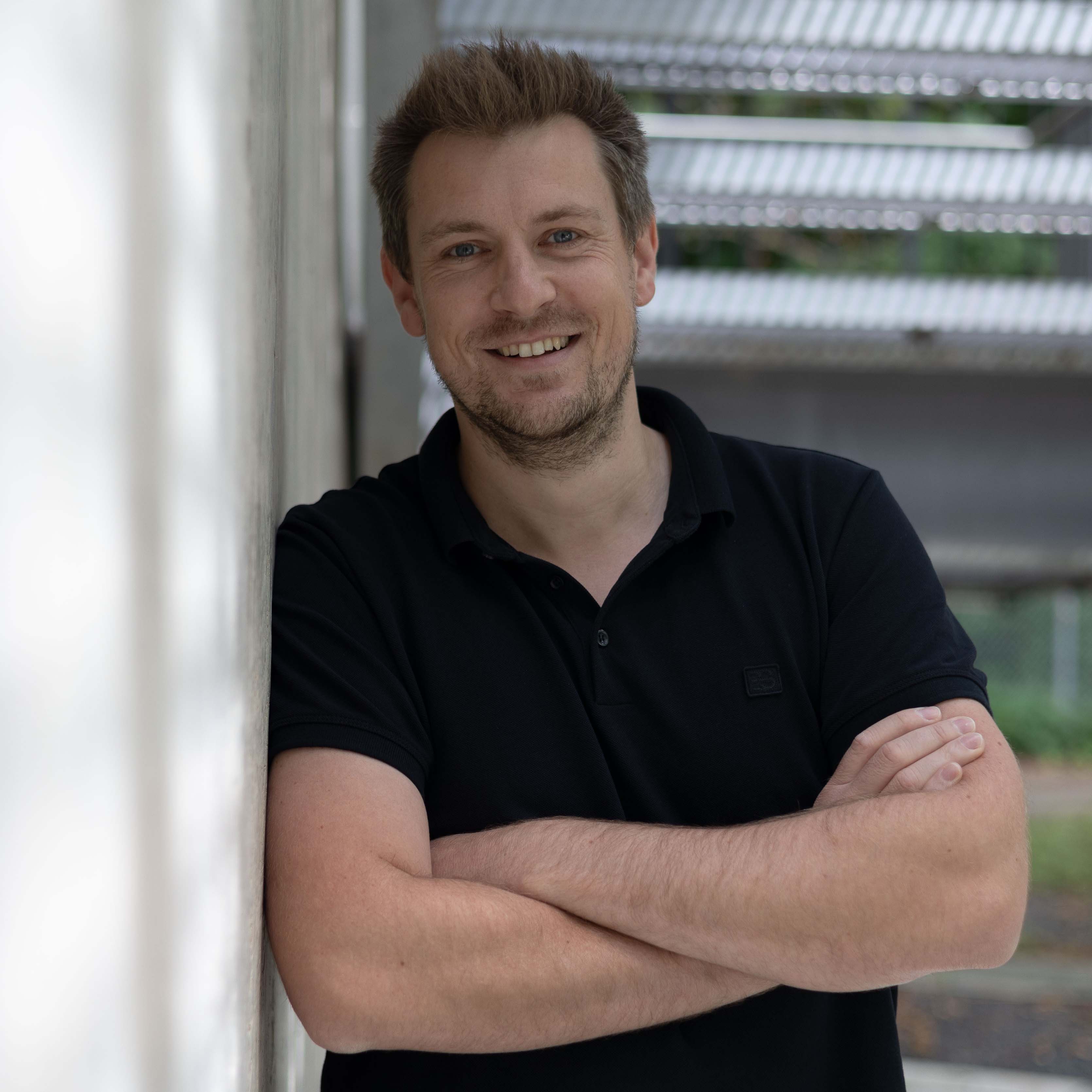
Could wearables of the future not only track heart rate and movement, but also continuously measure biomarkers in sweat? As part of the European collaborative project “H2TRAIN,” researchers from the Chair of Experimental Exercise Science, led by Prof. Dr. Moritz Schumann and scientific staff member Lars Heinrich, are working together with international partners on new sensor and wearable technologies. The aim is to enable physiological information to be collected continuously and as non-invasively as possible in the future.
“In H2TRAIN, we are working with technologies that are still at a relatively early stage of development,” explains Prof. Schumann. These include novel sweat sensors, systems for measuring muscle activity or oxygen saturation, as well as new approaches to energy supply and data processing.
“H2TRAIN” is funded by the European Commission and national partners – in Germany by the Federal Ministry of Research, Technology and Space (BMFTR) – with around €350,000 allocated to TUM. The project brings together companies and scientific institutions from several European countries and aims to strengthen the technological value chain within Europe, from the development of chips and sensors through to their application.
One focus of the research is sweat sensing. Until now, sweat has typically been collected using patches that are removed after physical activity and subsequently analyzed in the laboratory. “H2TRAIN,” by contrast, is investigating small sensors that can be worn directly on the skin and are designed to take continuous measurements. Initially, the focus is on parameters including pH. In the future, additional biomarkers such as lactate could be added. “If we can reliably measure pH in humans, we can then move on to other relevant biomarkers,” says Prof. Schumann.
However, technical measurability alone is not enough. While a sensor can be evaluated under controlled laboratory conditions, numerous additional factors come into play when measurements are taken in humans. The body region, sweat rate, or acclimatization to heat, for example, can influence the composition of sweat.
This is where the TUM researchers play a key role. In collaboration with project partners at the German Sport University Cologne, they are responsible for the practical application and validation of the technologies developed and lead a dedicated work package in this area. “We want to find out which factors influence the measurements and how we can reliably validate the sensors under realistic conditions,” explains Prof. Schumann. To achieve this, new sensors are tested on humans and their results compared with established laboratory methods. For technologies that are already at a more advanced stage, such as those used to measure muscle activity or heart rate variability, more application-oriented testing is already possible.
Another challenge is energy supply. The more parameters a wearable measures and processes, the more power it requires. “H2TRAIN” is therefore also exploring so-called “energy harvesting,” in which energy can be generated, for example, from movement or differences in temperature. “The more parameters we measure, the greater the energy demand,” says Prof. Schumann. The goal is to develop small systems that can be worn for as long as possible with minimal inconvenience.
At the same time, some of the data processing is intended to take place directly on the wearable. Many of today’s systems first transfer their data to the cloud. “H2TRAIN,” by contrast, is investigating ways of performing computations directly on the device. “As far as possible, the data should be processed locally, without always having to take the detour via the cloud,” explains Prof. Schumann. This could be particularly important for applications that require immediate feedback.
For sport, the continuous assessment of hydration status could be particularly valuable. Hydration plays an important role during prolonged endurance exercise and when exercising in hot conditions, but it can currently only be assessed to a limited extent. “If we could reliably determine hydration status, that would be a major step forward,” says Prof. Schumann. In the future, sweat sensors could provide information on how fluid and electrolyte losses change during exercise.
Many of the technologies being investigated in “H2TRAIN” are still at an early stage of development. The initial priority is therefore to demonstrate that they function reliably under real-world conditions. “First, we need to establish reliable access to these data,” says Prof. Schumann. “Then we can investigate the specific benefits they can provide for sport and health.”
To the homepage of the Chair of Experimental Exercise Science
To the homepage of H2TRAIN
Kontakt
Prof. Dr. Moritz Schumann
Chair of Experimental Exercise Science
TUM Campus im Olympiapark
Am Olympiacampus 11
80809 München
Phone: +49 (89) 289 – 24504
E-Mail: moritz.schumann(at)tum.de
Text: Bastian Daneyko
Photos: Private
Editorial Team: Prof. Dr. Michael Schaffrath