
Current Projects (Selection)
Currently we are working on these third-party funded projects:
- Advancing spatiotemporal pattern analysis using top-level sports data
- Winning probabilities and their perception in beach volleyball
- Anticipation training in beach volleyball
- Competition analysis in badminton based on keyplays
- Use of drones in sports
- Evaluation of AI generated training plans
- Competition diagnostics in wheelchair rugby
- Performance Analysis Table Tennis
Advancing spatiotemporal pattern analysis using top-level sports data
Contact person: Prof. Dr. Daniel Link
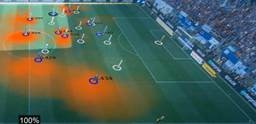
The vast amount of human spatiotemporal movement data hides huge opportunities for various stakeholders and scenarios (e.g., fire evacuation, autonomous vehicles, infrastructure planning, and sports performance analysis). To reveal hidden insights from this data, one can use various state-of-the-art machine learning (ML) approaches. Our focus is to develop and evaluate new approaches for solving typical computational problems, which arise when analyzing huge amounts of spatiotemporal data such as detecting variable-length patterns and finding the right representation models for movement trajectories. As a testing bed, we use sports data, in this case a high-quality dataset from the German soccer Bundesliga. The techniques developed and validated on our high-grade data provide a baseline for further research in all problems with pedestrian trajectory data.
Funding:
MDSI Seed Fund, https://www.mdsi.tum.de/en/mdsi/research/funding-support/seed-funds/
CSC Schoolarship (2x), www.chinesescholarshipcouncil.com
Publications:
Li, Y, & Link, D. (2023). Match Phase Detection in Soccer. 14th International Symposium on Computer Science in Sport 2023, 27.-30.09.2023. Hangzhou, China.
Dick, U., Link, D., & Brefeld, U. (2022). Who Can Receive The Pass? - A Computational Model for Quantifying Availability in Soccer. Data mining and knowledge discovery. doi: 10.1007/s10618-022-00827-2
Lang, S., Wild, R., Isenko, A., & Link, D., (2022). Predicting the in-game status in soccer with machine learning using spatiotemporal player tracking data. Scientific Reports, 12: 16291. doi: 10.1038/s41598-022-19948-1
Winning probabilities and their perception in beach volleyball
Contact person: Steffen Lang
Looking for a direct point win on a serve or would you rather put the ball safely into play? There are many variations in beach volleyball, just when serving. This project examines the question of when game strategies should be adapted during a competition and whether top athletes perceive these moments correctly. When, for example, the serve strategy should be changed and how much risk should be taken has not yet been scientifically proven, meaning that various subjective beliefs have formed on the part of sports practitioners. The two-year project was initiated together with the German Volleyball Federation and is being carried out in collaboration with the Institute of Psychology at the German Sport University Cologne.
Funding:
German Federal Institute for Sport Science (BISp), https://www.bisp-surf.de/Record/PR020240300069
Anticipation training in beach volleyball
Contact person: Fabian Tobias
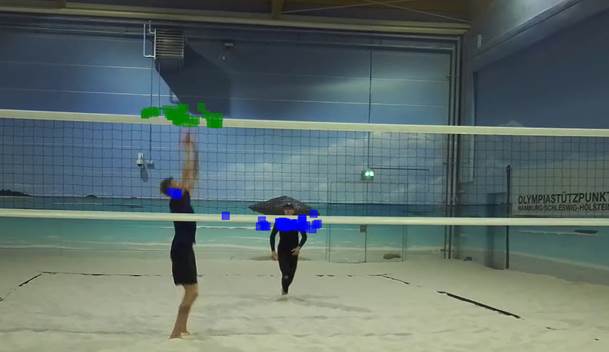
The aim of this project is to evaluate a training tool to improve the anticipation of defensive players. The tool was developed together with the German Volleyball Association to prepare the German national beach volleyball players for the 2024 Olympic Games in Paris. On the one hand, the correlation between the decision time of the defensive player (relative to the attacker's contact time) and the quality of anticipation (technique and direction of the attacking shot) is examined. Furthermore, the effectiveness of the anticipation tool is examined with regard to the learning effect in the measuring station training. Position-, gender- and age-specific differences will also be examined.
Funding:
German Federal Institute for Sport Science (BISp), https://www.bisp-surf.de/Record/PR020230100022
Analysis of Keyplays in Badminton
Contact person: Fabian Hammes
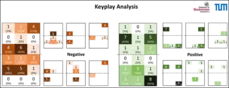
The aim of this project is to develop and apply a method for analyzing the transitions from balanced to imbalanced states within a badminton rally. In sports science, such situations are referred to as perturbations based on the theory of dynamic systems - sports practice often uses the term keyplays. Artificial intelligence methods are used to identify tactical patterns that trigger such perturbations. On this basis, player strength and weakness profiles can be generated and used as a basis for strategy development. The method will be used to support the German national team at the 2024 Olympic Games in Paris.
Funding:
German Federal Institute for Sport Science (BISp), https://www.bisp-surf.de/Record/PR020201100264, https://www.bisp-surf.de/Record/PR020210801317, https://www.bisp-surf.de/Record/PR020210400484, https://www.bisp-surf.de/Record/PR020240300034, https://www.bisp-surf.de/Record/PR020240300035
Publications:
Hammes, F., & Link, D. (2024). Badminton as a Dynamic System – A New Method for Analyzing Badminton Matches Based on Perturbations. Journal of sports sciences, 42(2), 160-16. doi: 10.1080/02640414.2024.2323327
Hammes, F., Link, D. (2023). Use of Computer Vision to Automatically Predict Starting and Ending Point of a Rally in Badminton. In: Baca, A., Exel, J. (eds) 13th World Congress of Performance Analysis of Sport and 13th International Symposium on Computer Science in Sport. IACSS&ISPAS 2022. Advances in Intelligent Systems and Computing, vol 1448. Springer, Cham. https://doi.org/10.1007/978-3-031-31772-9_11
Competition diagnostics in wheelchair rugby
Contact Person: Max Vater
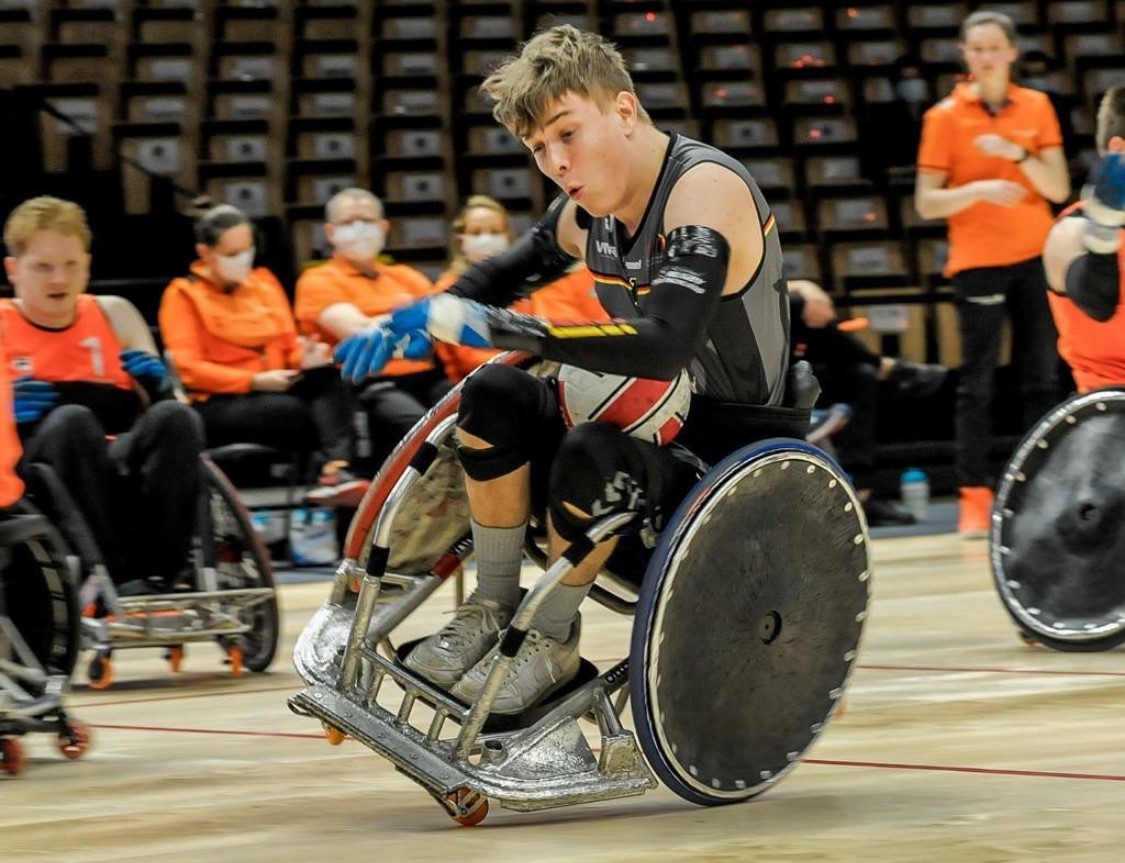
In cooperation with the German Disabled Sports Association and the German national wheelchair rugby team, the project is developing competition diagnostics based on a computer-assisted sport-specific observation system. The aim is to develop a field-suitable analysis tool that can be used routinely in practice for competition diagnostics in wheelchair rugby. The results obtained confirm the potential of sport-specific observation systems in the form of individually developed software solutions.
Funding:
German Federal Institute for Sport Science (BISp), https://www.bisp-surf.de/Record/PR020210701230
Publications:
Vater, M., Sing, K., Sauerbier, J., & Lames, M. (2023). Leistungsdiagnostische Untersuchungen der deutschen Rollstuhlrugby Nationalmannschaft unter Berücksichtigung der sportartspezifischen Klassifizierung. In J. Süßenbach & S. Schiemann (Eds.), Diversität im Sportspiel (pp. 214-229). Hamburg: Feldhaus Verlag.